Yes, we don’t all have deep pockets, unlimited funds or huge amounts of storage space. We can only do what we can. If you’re on a limited budget, like most people in this country (the vast majority) you won’t be able to buy truckloads of stuff in the week before Brexit is supposed to happen. That’s also the week before Hallowe’en when many people will be stocking up ahead of parties or Bonfire Night.
Big stores are supposed to be stocking up essentials, up to 3 months worth, so if you buy a bit extra now, it allows the stores to replenish those stocks, so there’s a bit more of a cushion for everyone at Brexit time (or no-Brexit time).
#TinsTuesday
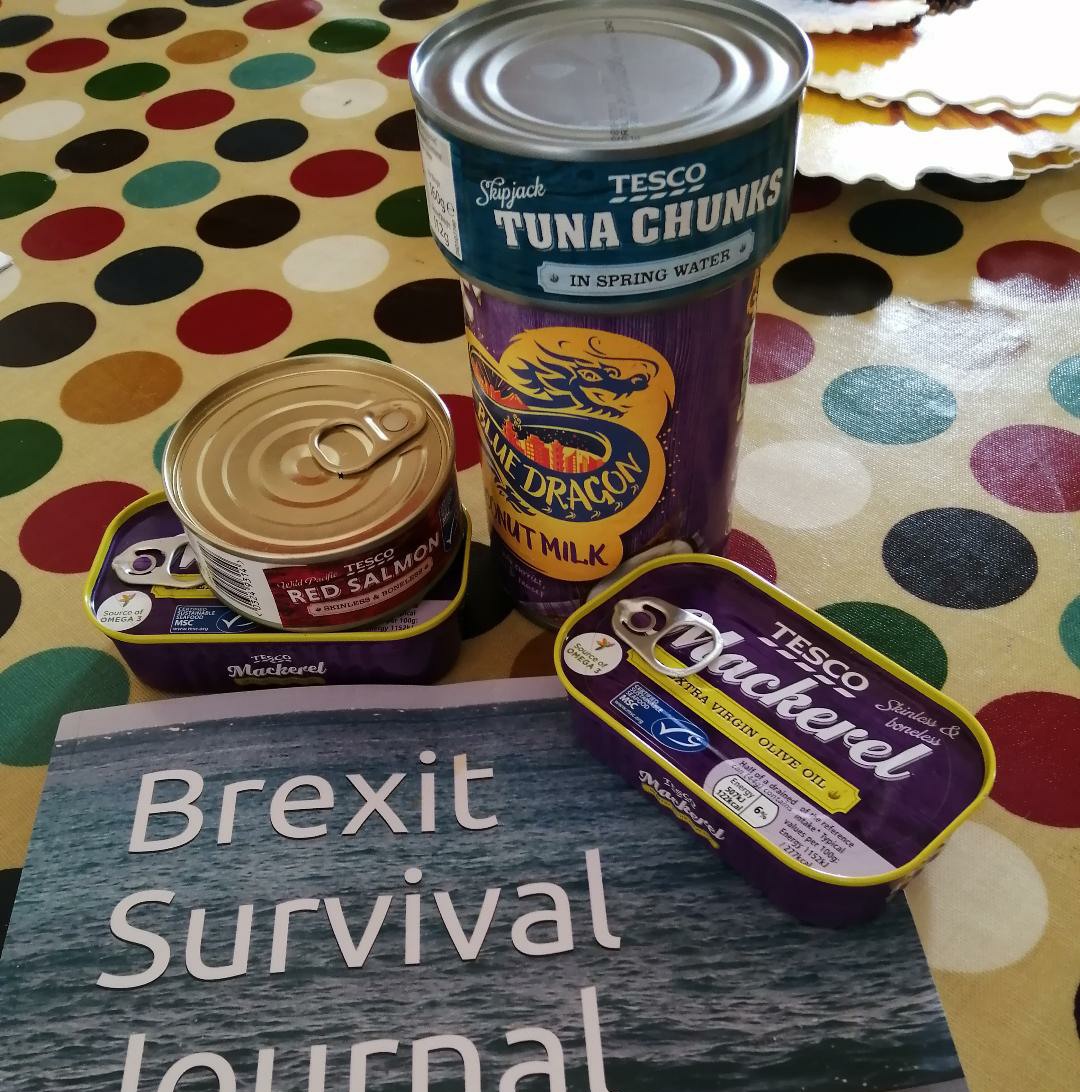
So buy a few extra tins today #TinsTuesday or the next time you do your shopping or the next time you get an online delivery. Put those tins away somewhere and don’t use them unless you have an emergency after Brexit. If the shop shelves are empty and trucks are held up somewhere at a border or port, you will be glad you have something you can eat, even if it’s cold from a tin.
Make sure what you buy is something you would eat anyway. Then if there is no Brexit panic or shortages, you will have a stock of stuff you can use as normal. It’s a form of saving.
Have you bought heating oil recently? What about petrol or diesel for your car or gas (natural or cylinder)? How much did it cost? Was it different from the last time you bought it?
The Cost of A Barrel Of Oil
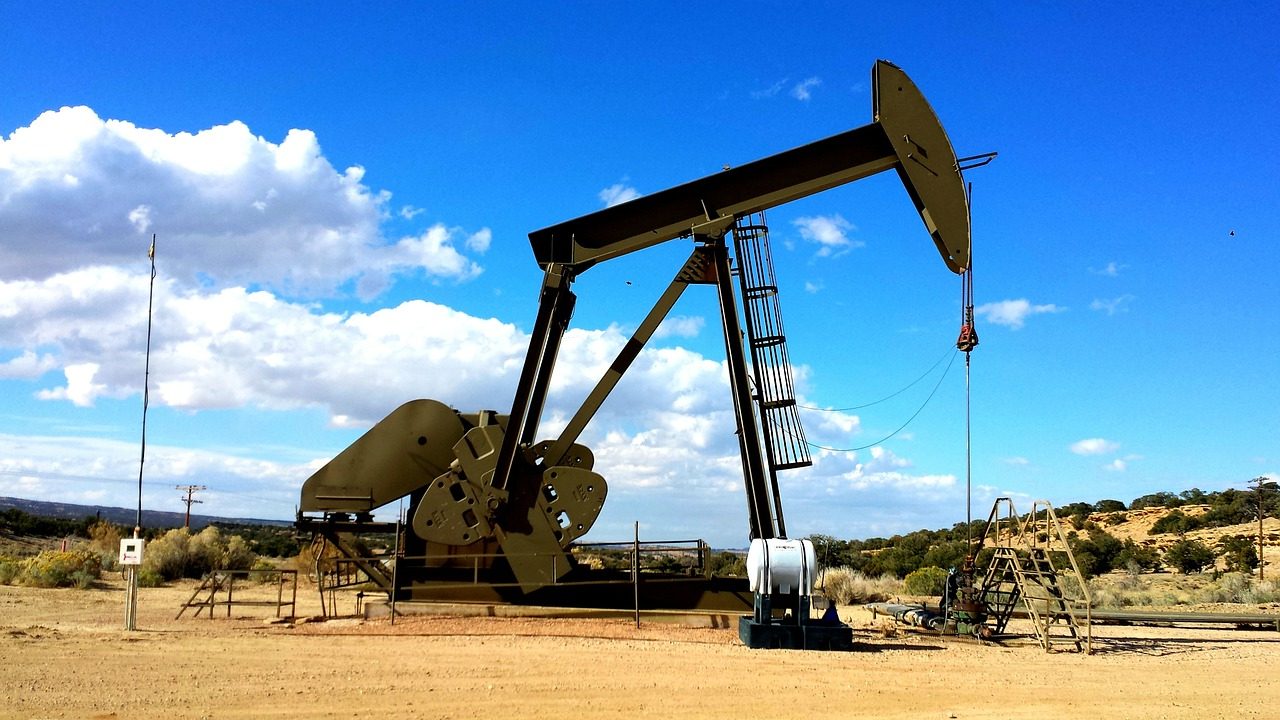
Heating oil, petrol, diesel and natural gas are all fossil fuels and while some, including coal, are produced in the UK, most are imported from countries with reserves of oil underground or under the sea. The oil reserves in these countries are used to produce the different kinds of fuel we use, such as heating oil and fuel for cars.
Oil is sold in barrels and charged for in US dollars. This is worldwide (at present, some countries are looking to change this.) That means that this country pays for all imported oil in US dollars. If you have been on holiday to the US, you will know that the amount of dollars you can buy for your sterling varies with the exchange rate. If the exchange rate goes up, you get more dollars for your pound. If the exchange rate goes down you get fewer dollars for your pound. At 4 August 2019, the exchange rate is $1.22. That means you get $1.22 for every pound you exchange. So if you wanted to exchange £100, you would get $122 back, for spending in the US. On 4 of July 2019, the exchange rate was $1.26, so you would have got $126 in exchange for £100. On 20 May 2016, a month before the Brexit referendum, the exchange rate was $1.45, so for that £100 you would have got $145.
How Does That Affect The Cost Of Oil
No matter what the exchange rate is, you still have to pay the same amount for a barrel of oil in US Dollars. The oil producers set these prices. The cost of a barrel of OPEC oil is $63.79 at present, this requires £52.46 to pay for it at an exchange rate of $1.22. If the exchange rate were still at the pre-Brexit referendum value of $1.45, that barrel of oil would cost £44.
Exchange Rates Are Not The Only Factors
Of course not. Oil has to be transported from where it is produced, refined, stored, transported, etc. That all adds to the cost and Brexit has nothing to do with that. Exchange rates vary all the time, anyway. When the Brexit result was announced, the exchange rate dropped considerably and then bounced back again. It has varied quite a bit but has not recovered its pre-referendum value.
Low Exchange Rates Can Be A Benefit
Yes, if you are exporting goods to other countries, then a low exchange rate is beneficial, you can sell more goods because your goods will be priced more cheaply than other similar ones, provided the other country does not impose an import tax.
The country will buy fewer imported goods because they will be more expensive than locally produced ones.
Tourists will be more likely to come to the UK because holidays will be cheaper and British people will be more likely to take staycations because holidays abroad will be more expensive.
Of course, if the Brexit negotiations go well, then the exchange rate is likely to go up. That will make oil cheaper. If the Brexit negotiations stall or there is a no-deal exit, then the pound may well fall further, making the cost of oil etc., higher.
31 October 2019
The Prime Minister, Boris Johnston, says that the UK will leave the EU on 31 October 2019, whether there is a deal or not. There may be import difficulties at ports with a no-deal, making it harder to bring oil into the UK and causing possible short-term shortages. For those with storage tanks running on low, that could mean some cold days in Autumn and winter, especially if there are power outages that mean water and fuel cannot be pumped. Some people may choose to buy their heating oil early, topping up at short intervals leading up to Brexit and also to keep their vehicles topped up with fuel. If you want to be as prepared as possible for what might come with Brexit, then get the Brexit Survival Journal and develop your own lists of what to stock up on, including heating well ahead of Brexit.
DISCLAIMER
NOTE: This article does NOT provide financial advice. You must do your own investigations before deciding whether or not to buy heating oil or any other product and when you should buy it.
This timeline of events will be updated through to the Brexit date of 31st October 2019 and beyond.
Politics Of Brexit
BREAKING NEWS
24 September 2019 – Not Lawful
The UK’s Supreme Court has ruled unanimously (11 Judges) that the decision to suspend Parliament was not lawful and that the prorogation was therefore null and void. The Speaker to the House of Commons, John Bercow, has called on Parliament to reconvene at 11.30am on Wednesday 25th September 2019.
11 September 2019 – Not Lawful
The Scottish Appeal Court ruled that Prime Minister Boris Johnston’s decision to prorogue (suspend) Parliament for 5 weeks until 14 October 2019 was not lawful. The UK Supreme Court is due to hear arguments on this next week, so no final decision or instruction on any action to be taken will happen before then.
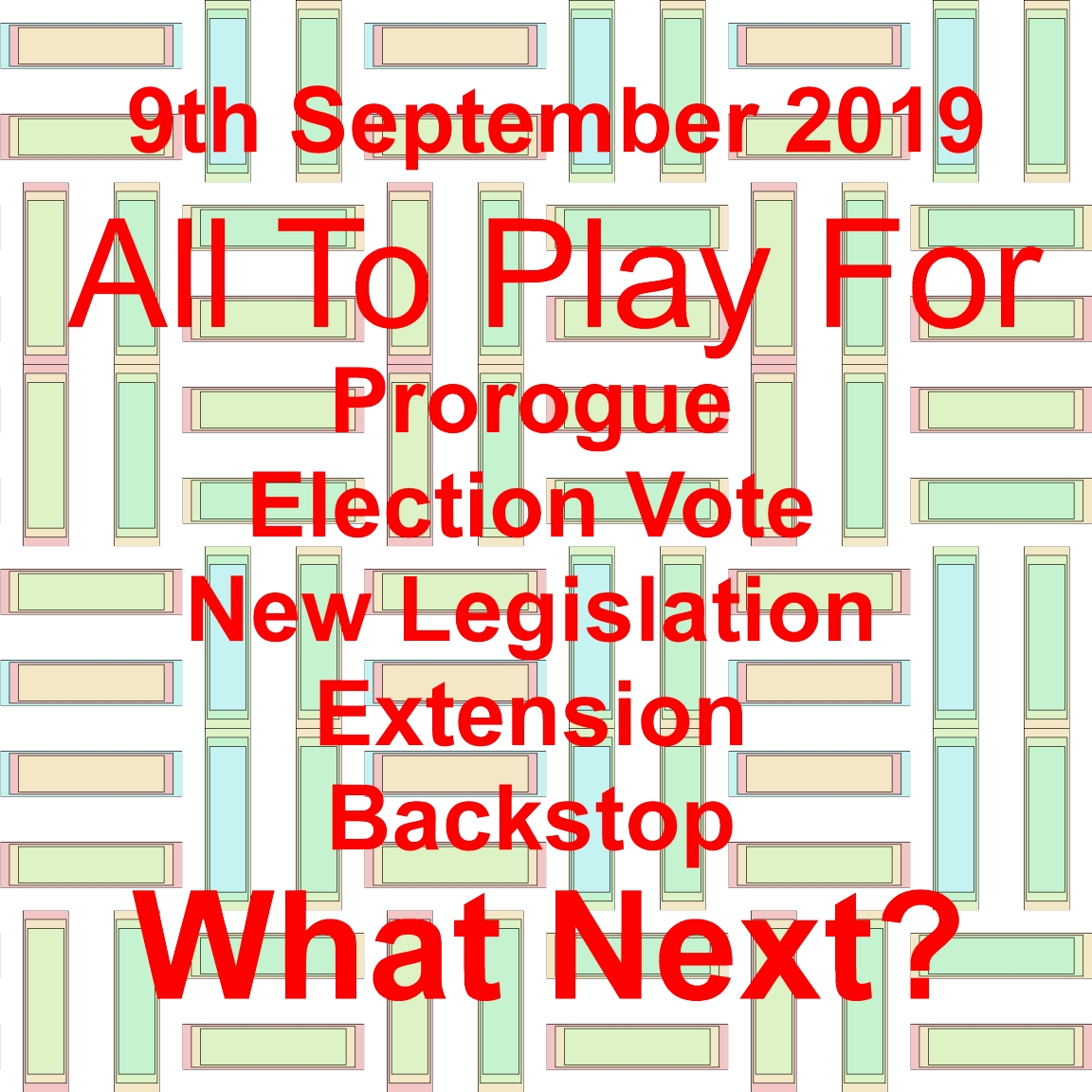
Current Options And Actions Being Considered at 9 Sep 2019
The Speaker of the House of Commons, John Bercow announced in Parliament, on the afternoon of 9th September 2019, that he is standing down, no later than 31st October 2019, unless a General Election is called before that date.
The Prime Minister, Boris Johnston is thought likely to call for a vote on a General Election today, 9 September 2019. He needs two thirds of MPs to vote for this. It is considered likely to FAIL, as MPs do not wish to risk the UK leaving the EU by default at 31st October, if they are in the middle of an election campaign.
Parliament is likely to be prorogued (suspended) after any failed election vote and will not sit again until 14th October 2019, on which day, the business of the House will be “The Queen’s Speech” (written by the government) which lays out the work to be done by Parliament in the coming session. During prorogation, MPs will not be able to sit in the House of Commons nor will there be any debates. It is possible that informal debates will take place elsewhere.
The emergency bill passed by Parliament to compel the Prime Minister to seek a 3 month delay in the UK’s departure from Europe (Brexit) if no deal has been struck by 19th October should become law today and receive the Queen’s assent. (The Queen is a constitutional Monarch, which means she is advised by the Government and Parliament on what laws should be passed.) If the Prime Minister refuses to request an extension after the October 19th deadline, he could theoretically, go to jail.
The EU has to OFFER an extension to the Brexit date, if they do not offer an extension, then the UK leaves without a deal on 31st October 2019 anyway.
France has said that they may vote against offering a Brexit extension and the government has suggested that this is one way forward for them, which would avoid the Prime Minister having to request an extension, which he has said he will not.
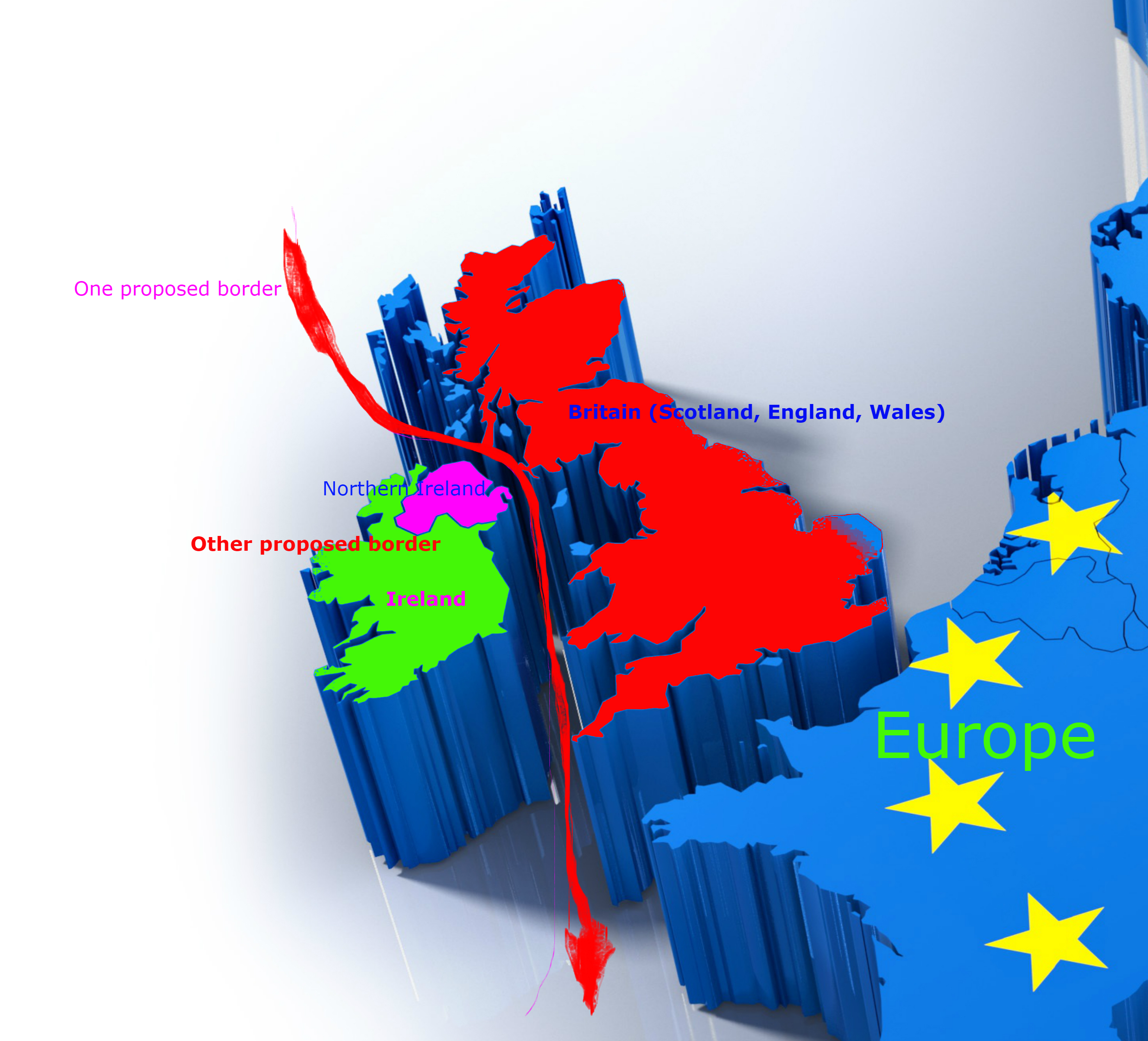
One of the barriers to agreeing a deal with the EU is the border between Northern Ireland (part of the UK) and the Republic of Ireland (Ireland) on the island of Ireland. This border is the only land border between the UK and the EU. The Good Friday Agreement, which brought peace to Northern Ireland, made this an open border with no barriers to trade or passage of people. If the UK leaves the EU, there may need to be border crossing points again. This would break the Good Friday Agreement and could lead to the return of “The Troubles” in Northern Ireland. One option would be instead, to have the border down the Irish Sea (the stretch of water between the island of Ireland and Britain), leaving the border between Northern Ireland and Ireland as it is. This however, would not be acceptable to the Democratic Unionist Party in Northern Ireland, who would argue that this would be treating Northern Ireland differently from the rest of the UK. The Prime Minister of the UK, Boris Johnston is discussing this with the Taoiseach of Ireland, Leo Varadkar, today, 9th September 2019.
2 September 2019
The Prime Minister is now thought likely to call a General Election. Parliament returns from its summer break tomorrow, 3rd September 2019 and it is considered likely that a General Election will be called. This will require a two thirds majority of MPs agreeing to an election. Many will be wary of agreeing only to find that the election is held over 31st October 2019, allowing a no-deal Brexit by default. If an election is agreed, it is likely to be on 14 October 2019, before the Brexit deadline.
News has just been issued that the government is to ask the Queen to suspend parliament from a few days after it returns from its summer recess until 14 October 2019. The given reason is to allow the government to prepare a Queen’s Speech which sets out what the government will do in the coming session. MPs who are opposed to a no-deal Brexit are saying this is anti-democratic as it does not allow MPs to fulfil their democratic part in the process of dealing with Brexit.
WATCH THIS SPACE!
27 August 2017
Some of the Members of Parliament who are opposed to a no-deal Brexit met to discuss how they could prevent the UK crashing out of Europe without a deal. The meeting was fairly short and consensus appears to be that they will attempt to bring legislation before Parliament to force the government to request a further extension to the Brexit exit date of 31st October 2019. Other options they discussed included forcing a “vote of no confidence” in the Government and forming a government of national unity with representatives from all parties. Those options appear to be left in reserve.
Government Preparations For Brexit
On Sunday 18 August 2019, the Sunday Times newspaper published excerpts from leaked government documents, codenamed Operation Yellowhammer, that are said to set out likely problems that could happen in the event of a no-deal Brexit. These include shortages of food, fuel and medicine, 3 months of chaos at ports and the possible return of a hard border in Northern Ireland. It now appears that there are two further disaster-scenario papers, code named Black Swan and Kingfisher which have not been published.
A Little Bit Of Bread And No Cheese
The yellowhammer is a bird that is widespread in Europe and Asia. Its song sounds like the phrase, a little bit of bread and no cheese. Was this code name just a coincidence?
Government Denial that “Yellowhammer” is Relevant
The new government formed under Prime Minister Boris Johnston says that this report is an old one, prepared for the previous government and that this government is working to ensure no chaos in the event of no-deal.
Sterling Exchange Rate September 2019
At midday on 3 September 2019, the sterling to US Dollar exchange rate is at 1.20 and with the Euro, stands at 1.10.
The pound to US Dollar exchange rate has started out the month of September at 1.21 and the Sterling to Euro exchange rate is at 1.1 on the news of a possible General Election.
Sterling Exchange Rate August 2019
The Sterling to US dollar exchange rate started July 2019 at 1.26, dropping to 1.22 by 31 July. It was said that this was the worst month for the pound since October 2016. On 1 August 2019, the exchange rate dropped to 1.21, a 2 year low, as the Bank of England kept the interest rate steady at 0.75%, stating that there was a 33% chance of a negative economic growth rate by the start of 2020, which could signal the start of a recession. By 4 August 2019, the pound had recovered slightly to 1.22.
On 9 August 2019, The Office For National Statistics (ONS) said that the UK economy had shrunk in Quarter 2 of 2019 (April to June). Sterling fell against both the US Dollar and the Euro, to $1.2097 and €1.0794. This has provoked fears that the UK could be on the verge of a recession. This is defined as a contracting economy in two consecutive quarters. One of the reasons is thought to be that many firms stocked up ahead of the initial Brexit date (29th March 2019) and did not need to buy any further stocks and that uncertainty has slowed spending.
On 19 August 2019, the pound sterling against the US dollar exchange rate is $1.21.
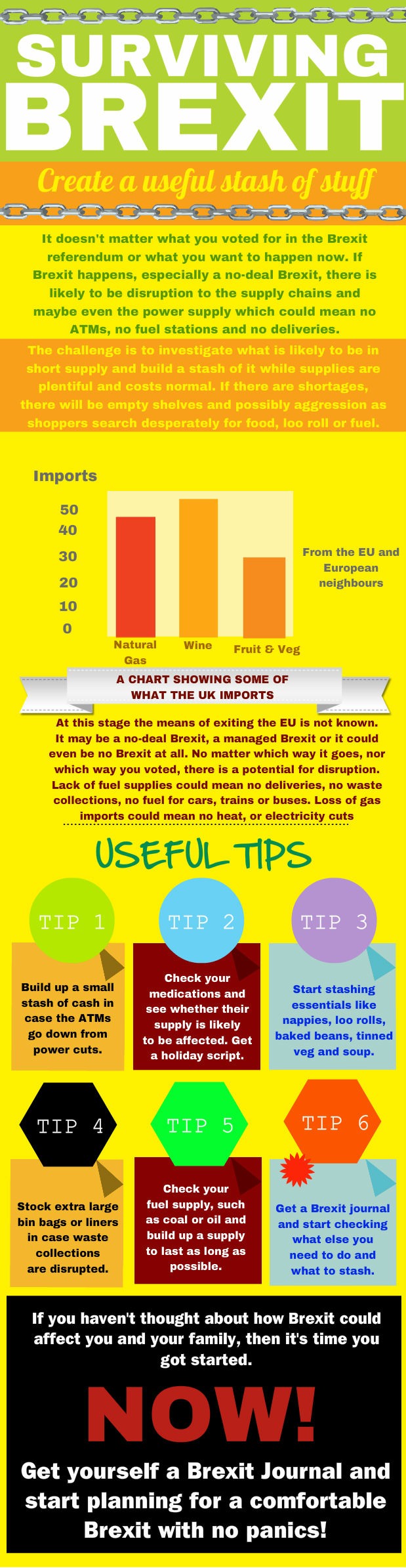
If you want to build up a stock of foods and other items, in case of problems at 31st October 2019, then you may find the Brexit Survival Journal useful for providing ideas on areas to check, items to stock and space to record your own information.
Boris Johnson Becomes Prime Minister
Wednesday 24 July 2019. Says Brexit will take place on 31st October 2019, deal or no deal and that the Irish backstop must be removed for a deal to take place. The EU has said that the backstop must remain.
Theresa May Resigns As Prime Minister
She tendered her resignation to H M The Queen, 24 July 2019
Parliament Indicative Votes
Indicative votes are where MPs vote to test the will of the House of Commons on a single issue by voting on a series of options on that issue. Votes were held on 27 March 2019 and a second round of votes on 1 April 2019.There was no majority for any of the options.
Article 50 Triggered
Article 50 – legislation that formally notified the EU that Britain would leave – was triggered on 29 March 2017. This led to the first leaving date of end of March 2019 – two years after Article 50 became law and was delivered to the EU. The leaving date was extended twice, finally to 31 October 2019.
Theresa May Elected As Prime Minister
13 July 2016, after being elected leader of the ruling Conservative Party
Prime Minister David Cameron Resigns
Friday 24 June 2016.
Referendum On Membership Of The EU
Thursday 23 June 2016. Britain voted 51.9% to 48.1% to LEAVE the EU, 43 years after joining it.
Britain Joined The EU
1 January 1973. (It was known as the EEC at that time – the European Economic Community.)
OK, while you can last about 3 weeks or so without any food, no one is suggesting a total lack of food in the UK following Brexit. There may, however, be shortages of certain foods at certain times, either due to import difficulties. or if fuel is in short supply, so supplies can’t get to certain areas.
A lot of the UK’s food is imported. For instance, bread is usually made with imported wheat as UK-grown wheat is not always suitable for making bread (ref: http://www.nabim.org.uk/imports-and-exports).
Imported Food
Many of the fresh vegetables we eat in the UK are imported: oranges, fruits and veg out of season, such as tomatoes, lettuce, courgettes and soft fruit. Maybe you don’t eat that kind of food?
Perhaps you prefer fish and chips? Most UK potatoes are home grown, so potatoes should continue to be available, provided transport is available. The fish might be a different matter.
Hopefully, all foods we currently have will still be available after Brexit, even if takeaways are having difficulties, however, it is possible there will be some shortages and delays while trading terms are finalised. It would certainly be wise to stock up on basic foods, especially those that require little or no cooking and that can last in a store cupboard for a good while, provided that they are foods you would normally eat.
Baked beans
This is a staple item of many people’s diet in the UK but all the beans have to be imported because they do not grow in the UK. Baked beans store well, most kids will eat them and they are nourishing, having a fair amount of protein and fibre and also vitamins and minerals. Top them with some grated cheese and serve on toast and you have a hearty lunch. If the power is out, they can be eaten cold, so if you like baked beans, then stock up on them ahead of Brexit.
Other Tinned and Packet Staples
If you’re stocking up on foods that your family likes to eat and that are easily stored and cooked or heated, check up on your stocks of spaghetti in tomato sauce, soups, tinned ham, canned peas, pasta and ready made curry and tomato sauces.
Tinned fish
Most of the fish that ends up in cans: sardines, tuna, pilchards and most salmon etc is imported. If you like canned fish, then building up your stocks would be a wise move.
Flavourings, Spices And Sauces
HP sauce, a British staple is produced in the Netherlands. While Heinz tomato ketchup is made in the UK, many ingredients for sauces, flavourings and canned or packet ready -meals may be imported. Table salt is mostly produced in the UK but pepper is imported.
Cold And No-Cook Foods
Nuts, nut butters, dried fruit and porridge oats are all handy storage items and can be eaten without any cooking. Nuts and nut butters, especially provide protein and healthy fats. Dried fruit contains iron. Oats, chopped nuts and dried fruit make a handy muesli, together with some sugar if you need it. Nut butters spread beautifully on bread, soda bread or crackers.
Foraging
If you live near the countryside or have a large garden, you may be able to add some foraged items to your diet, if fresh foods are running low. Blackberries and plums can often be found growing wild, ready for picking in the autumn. Don’t forage near roads because of pollution. Don’t forage if you don’t know what you are picking. Some wild plants can be fatal.
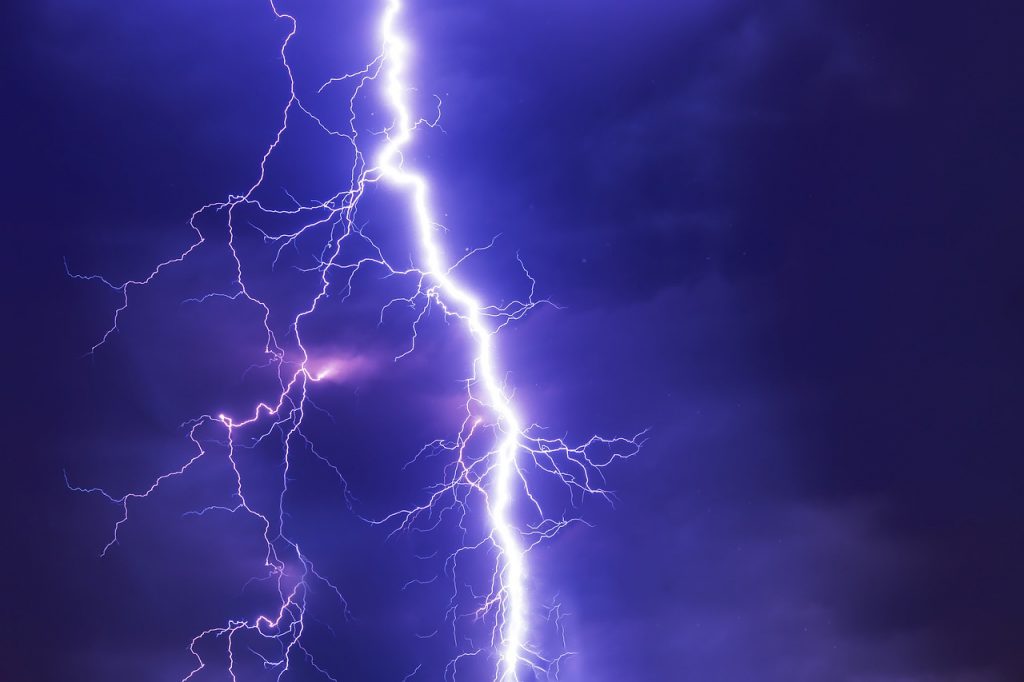
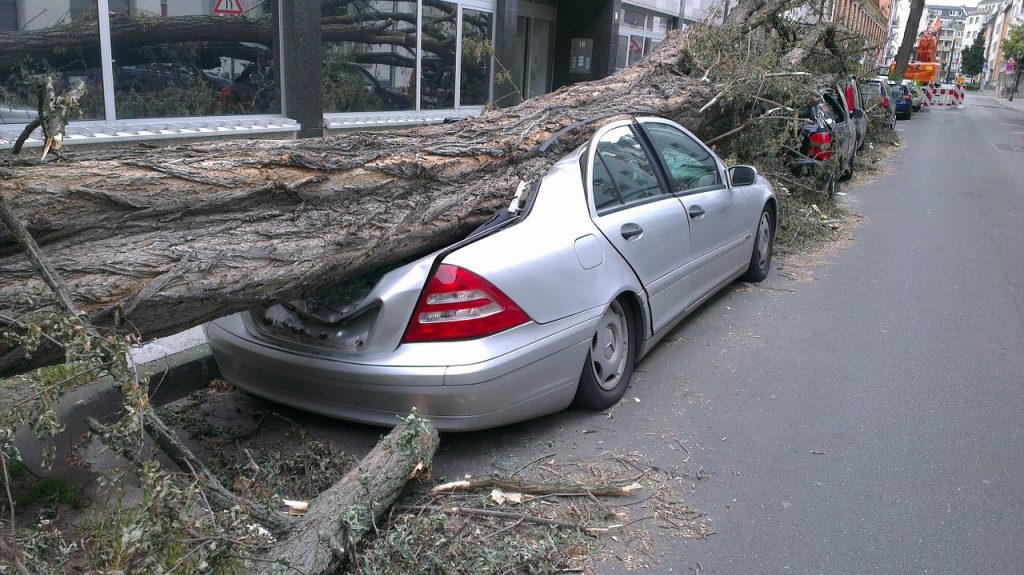
Power supplies can go off at any time, not just because of Brexit. They can happen during a storm, with high winds, or because an electricity substation blows up, because a tree falls or can even be known in advance, when the electricity company needs to carry out planned maintenance on the system.
Did You Know?
In 1859, a solar storm, known as the Carrington event after one of the astronomers who recorded it, hit earth and caused a magnetic storm. In those days, the only electrical appliances were probably telegraph systems for long distance communication and these were badly affected, with sparks flying from them and starting fires. If a similar event happened nowadays, most of the planet would suffer electrical blackouts and widespread disruption, possibly lasting days or even years, until the damage could be repaired.
Effects Of No Power
If another Carrington-type event hit us, one of the most amazing effects would be powerful auras, lighting up the skies. At the same time, though, satellites would be destroyed and electricity grids would go out, leaving whole countries with no power and enormous amounts of damage that could take months, if not years, to repair.
Not As Severe
Hopefully, any power disruption from Brexit, or any other cause, would be on a much smaller scale that this, possibly only in local areas, but in those areas, the loss of electricity would mean:
No ATMs working,
Fuel stations not operating
Shops with electronic tills and barcode scanners would have to revert to manual operation.
Credit and debit cards would not work, cash only.
No computers or TV;
Data can be lost resulting in errors in bank accounts and other electronic information;
Did You Know? In July 1977 the city of New York was blacked out after lightning hit a substation and then power lines. The city remained blacked out until the next day. The city was in the middle of a heat wave, so all the air conditioning went off, people were stuck in lifts, TV went off, there was widespread looting and vandalism, the airports were closed, road tunnels were shut down because there was no ventilation and passengers had to be evacuated from the subway. Sports stadiums had to be closed and spectators sent home
Mobile phones, tablets and other mobile electronic devices could not be charged,
Electric cookers would not work – no cooking;
Your heating system might not work, as water is pumped around the system by electricity if you use an oil fired boiler;
Fast food shops would mostly be unable to operate;
Refrigeration systems would heat up, losing frozen and chilled food;
Businesses would have to shut before dark;
No street lights;
Public transport would stop when vehicles couldn’t have fuel pumped in;
Ambulances, fire engines and police vehicles might not be able to operate at full strength;
Electric trains and trams would just stop;
Escalators and lifts would stop, possibly trapping some people;
Store deliveries would stop if lorries could not get fuel;
The subway would stop, possibly trapping some people underground;
Medical equipment may stop operating unless it has a backup;
Medical records can be lost or be unreachable when needed for medical emergencies.
There’s not a lot that individuals can do to prevent the mains electricity going off, however, it is certainly possible to make preparations that can make life a lot easier until the electricity comes back on again. And it’s always the worst time that it goes off – in the middle of a cold storm, in the middle of the night, when you’re cooking dinner ….
The Most Important Areas
Cooking: Do you depend on electricity for cooking?
Heating: Do you depend on electricity for heating?
These are the two critical areas. If Brexit happens at a cold time of the year, it will be vital to have some warmth and to be able to cook a hot meal. If your only source of heat and cooking is mains supply electricity, you may go cold and possibly hungry until power is restored, unless you have your own solar panels or wind turbine producing electricity for you. And if the power is off in a widespread area, then fast food shops will have to close too.
Of course, apart from having your own solar cells or wind turbine producing electricity, the big hitter to have in a power outage is your own generator. It may not be possible to run a normal electric cooker from one of these but it would certainly be sufficient for a microwave or slow cooker or anything that runs from a normal 13 amp plug (does not apply to electric cookers). There are also power generators that are specially designed for running home electronics, like computers.
If you don’t want to go to the expense or storage requirements for a home generator, you might consider getting a camping stove, that runs on gas cylinders and for light, you can get emergency lanterns that remain plugged in while the power is on and that turn on when power stops. Remember to check that you have all the parts you need if buying any of these and that you have a storage can for the correct fuel if getting a generator.
If you have any other source of heat, such as gas cylinders or coal, then check your supplies and keep them topped up as Brexit looms closer. And it’s also useful to add some blankets and extra layers to your bedding or clothing supplies, to ensure you do not lose body heat.
Water is essential for drinking, cooking, washing, flushing toilets and laundry. People need a litre (about 2 pints) of water a day, just for drinking.
No Power – No Water
Depending on where you live, if the power supplies go down, you may have interruptions in water supply (if you live on a hill and water is pumped). If fuel supplies are restricted or chemicals cannot be imported, the water provided may not be of drinking quality.
Bottled Water
You may wish to store some bottled water in the house, in case supplies are interrupted. You may also wish to get a supply of water purification tablets in case the tap water is not of drinking quality. Alternatively, you can boil it, if there is power. You may also want to filter the water, using a sieve and kitchen roll.
It would also be useful to include bottled water in any emergency bags you make up in case you have to leave the house. Large bottles of water are more economical to buy, however, smaller bottles will be easier to transport in bags if necessary.
Other Supplies
If supplies go off, you need to plan what to do for flushing toilets (don’t flush for pee, only for the brown stuff). If extreme measures are called for, then line your toilet with a black plastic bin bag and dispose of it every few days. You may have to put off washing laundry and having baths or showers. A bucket is useful for carrying water. A washing up bowl is useful for washing dishes with a limited supply or if the power is off for the dishwasher.
If you have a garden, you could plan to store water in a rain barrel, for emergency use. A large water butt can hold 200 to 300 litres of water. This may sound a lot but just flushing the toilet may use up 70 litres per person per day for older toilets and half that for low flush toilets. For a two person household that means 70 to 140 litres of water a day, just for flushing the toilet. That would soon empty one water butt. If you have an older toilet, you can add a water saver to the cistern, to reduce the amount of water used in one flush.
If you have to leave home, you need a plan of where to meet and where to stay. Leaving may occur when some people are away from home – at work or school or it may be in the middle of the night.
This is never good and can be worrying, especially if you have no way of contacting absent family members.
Preparation
Again, preparation is the key to reducing worry and panic as far as possible.
Local
Decide ahead of time on a local meet up place, such as a cafe or a friend’s house. Decide on another fairly local place in case that one is not available for some reason. This should be a place that you all know and where you can regroup. Write the address and phone numbers down and make a copy of the information for each family member.
Regional
In case a local meeting place is not feasible, decide on a regional meeting place that everyone should try to get to. This of course will be more difficult, especially if transport is affected, however, it gives everyone a place to try to reach. Add phone numbers of the place to the contacts list.
Main Contact Person
It can be handy to have a contact person who is not too close in your local area and / or one who is far away. They can act as an office, to take messages, pass them on, etc.
Secret Family Password
This can be useful if you think people may be in trouble or a way of saying that you are under duress. It needs to be something that can pass as a real question or piece of information, yet is only used in an emergency,such as asking about a non-existent family pet.
Emergency Bag
Having an emergency bag with washing, first aid and a few food supplies is useful if you can always have it with you. Perhaps in your hallway to grab as you leave, or in the car boot or a small bag inside a school bag or an everyday bag that you carry with you at all times outside the house. Keep the list of addresses and contacts inside the bag, so it is always available.
For most people, staying at home is the easiest and safest option in troubled times and it is assumed that this is where you will be.
If you want to stay within your home and not have to go outside to get supplies, you will need to make sure you have enough stuff to last you for about 3 weeks at least, possibly even 6 weeks. You may not use your emergency supplies all the time, you may just need to call on them when there are shortages and then stock them back up again when fresh supplies come in. But isn’t it good to know that you will be able to feed yourself and your family and have some comforts if necessary?
Hopefully, any troubles will be over and supplies will be back in local stores again, within about 6 weeks, though there may be shortages and some items may take a lot longer before supplies are available whenever you want them.
Shelter
Your first priority will be shelter. But with Brexit, hopefully, this will be your own home and with any luck you will have your normal utilities, water, electricity and a cooking stove.
If you need to move out of your home, other preparations will be needed ahead of time, this is dealt with later.
Staying in your own home is the best bet in most cases but you will need to prepare in case any of the utilities (like water, gas and electricity) are interrupted, as well as store food that your family can eat: and store drinking water.
Think of how you could manage to cook if the power goes down, or the gas or fuel are delayed. If you have only electricity for cooking, for instance, you will need to think of another way of being able to cook. Maybe you have a coal fire? Maybe you need to buy a portable camping stove? Think about what you need to DO in order to be able to cook. Perhaps you need to stockpile some more gas cylinders or more coal?
What is the Plan……………………………………………………………………………….
When will you do this? ……………………………………………………………………….
What is the Budget? ………………………………………………………………………….
There is a journal available with check sheets that you can fill in and use to save recipes and stuff ahead of time. Knowing what’s important allows you to budget for any expenditure and find a place to store stuff, keep it fresh and rotated and keep everyone up to date on the plan and how to work it.
Having A Cunning Plan
When an emergency is announced, the shops are besieged, everyone runs round like a nest of ants that has been dug up, saucepans or bathtubs of water are stored and very few eat properly. A few days later the water is emptied out, the bread is stale and everyone goes back to their ordinary lives, apart from the few who got caught out and those who were really prepared.
Which Do You Want To Be?
Prepared
The prepared person has a plan that everyone knows, has stores of food that they and their family like and will eat, that can be used if necessary and that will not be wasted if they are not needed just now. They have clean water, medical supplies, ways to keep their pets safe, a working car and a safe home to go to if they have to leave.
Unprepared
The unprepared person ends up cold, hungry, sitting in the dark or maybe a local community hall, without their pets or medications and no clean clothes.
You need a plan that will:
● Help you keep in touch;
● Keep you sheltered;
● Keep you fed and watered;
● Keep your pets safe;
● Keep your transport working where possible; and,
● Keep your medications current and more……
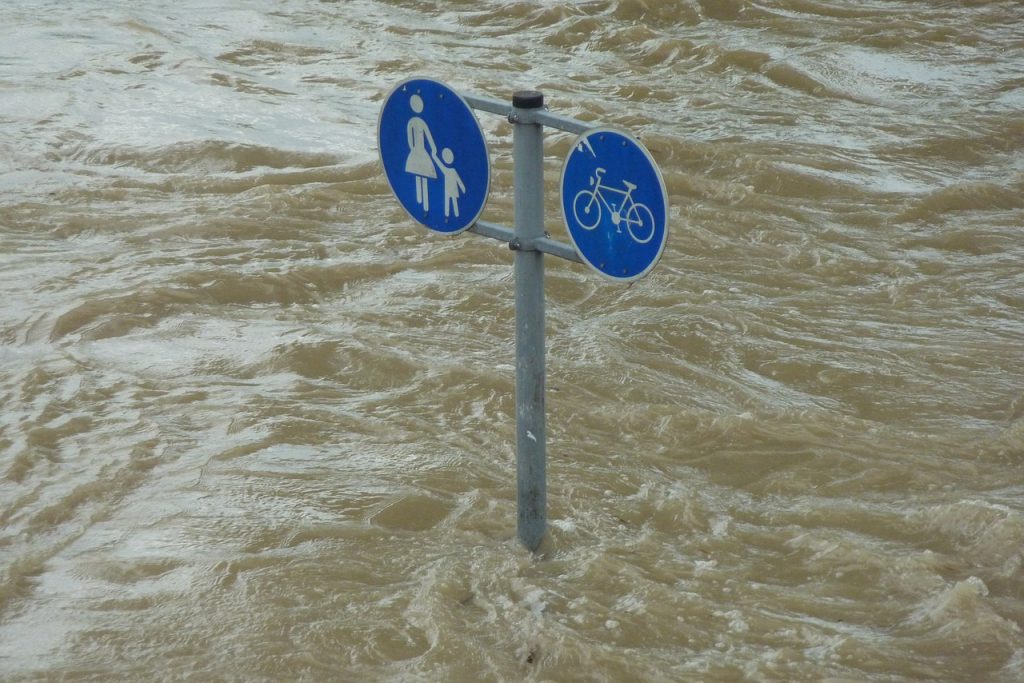
Problems have happened in many countries, from fire, flood, hurricane, political unrest…. to earthquakes, tsunamis and volcanoes. Citizens have not asked for problems but they are the ones who have had to deal with them. For instance:
The government decided that the citizens were going to be their backup bailout plan for the country’s debt. Once the government announced it was going to take 10% of the citizens’ bank funds, panic and protests ensued. There was a mad run on the ATMs as people scrambled to pull their money out. Because of the surge of withdrawals, the ATMs ran out of money and the government closed banks temporarily to keep people from taking out all their money.
Hurricane Katrina in the USA (August 2005)
If people were not stranded by the flood waters, they were stuck because they had no fuel to get out of town and there were no fuel stations working, because there was no power.
Earthquakes in California in the USA (July 2019)
California experienced two large earthquakes and many smaller shocks in July 2019. There is a 5% chance of an even bigger quake happening and some people are concerned that it may trigger “the Big One”, on the San Andreas fault. Luckily, there were no fatalities in the two quakes, however, fires were started from ruptured fuel lines.
The Great Storm of 1987 (UK)
The weather service didn’t see the great storm coming and the worst storm in 300 years hit a totally unprepared southern coast of the UK, leaving 18 dead, trees uprooted, roofs blown off, power lines down.
Workers Strike Northern Ireland 1974
Electricity and town gas were both turned off, groups closed streets and roads, no cars or buses could get through. Farmers sold milk from the back of vans, shops ran out of food. Meals could be cooked on coal fires if you still had one after the push to install central heating to avoid smog issues.
Disasters Everyday
There are many disasters and emergencies around the world, possibly every day. Emergencies can happen at any time. A power line down and local electricity won’t work, no ATMs for cash, no fuel available at petrol stations, perhaps no means of cooking, even if only for a short while.
Prepare
It’s only sensible to prepare for emergencies if at all possible. One may not happen and that’s good, however, being stuck with no food, heating, lighting or warmth, especially if you have young or elderly to care for, is no joke.
This website uses cookies to improve your experience. We'll assume you're ok with this, but you can opt-out if you wish. Cookie settingsACCEPT. Closing this message indicated acceptance.
Privacy & Cookies Policy
Privacy Overview
This website uses cookies to improve your experience while you navigate through the website. Out of these cookies, the cookies that are categorized as necessary are stored on your browser as they are as essential for the working of basic functionalities of the website. We also use third-party cookies that help us analyze and understand how you use this website. These cookies will be stored in your browser only with your consent. You also have the option to opt-out of these cookies. But opting out of some of these cookies may have an effect on your browsing experience.
Necessary cookies are absolutely essential for the website to function properly. This category only includes cookies that ensures basic functionalities and security features of the website. These cookies do not store any personal information.
 The Cost of A Barrel Of Oil
 The Prime Minister is now thought

 Power Supplies Can Be Lost
 Water
Water Leaving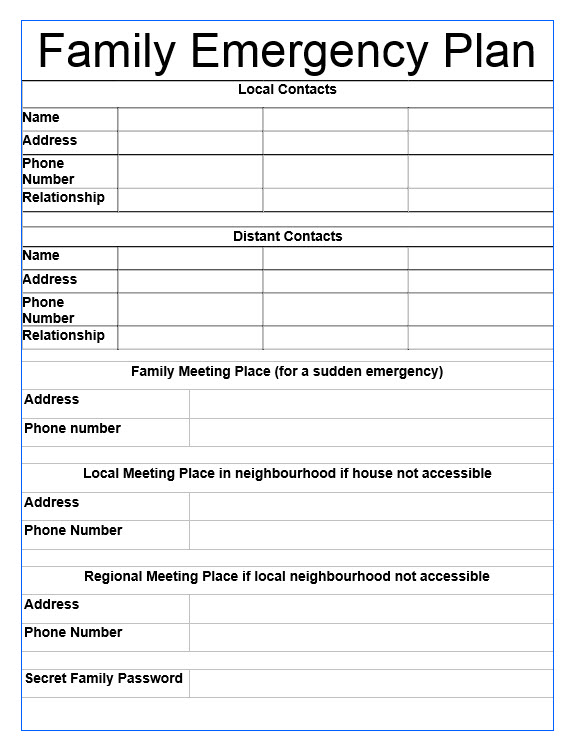
 Home
Home Cooking
 The Important Stuff
 Survival